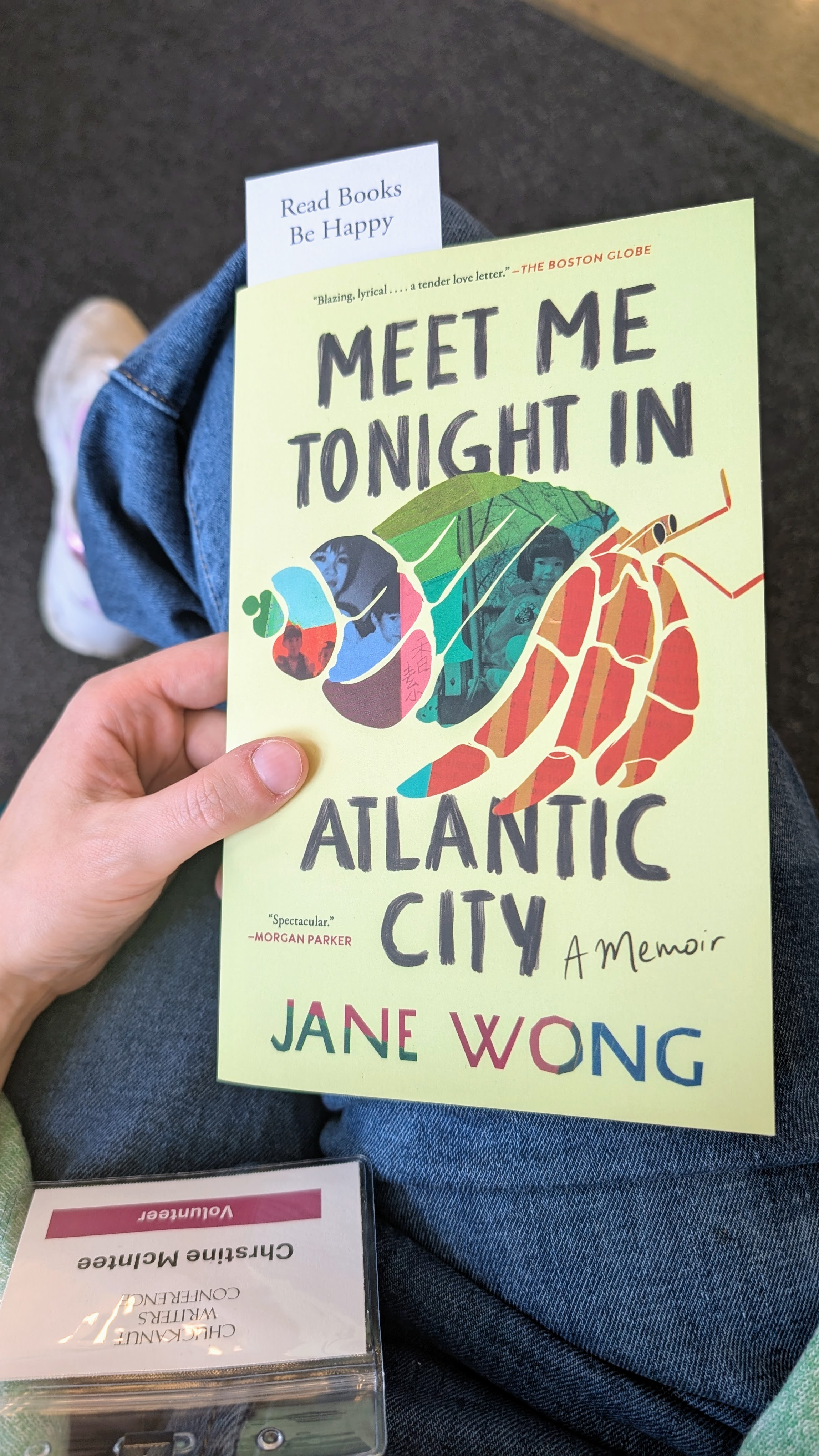
“Language is powerful, as we know… How something is said makes us feel something, makes us act in both beautiful and terrible ways. Knowing all the damage language can do, we must ‘jostle language into new possibilities.’” -Jane Wong, Meet Me Tonight in Atlantic City (pg. 250)
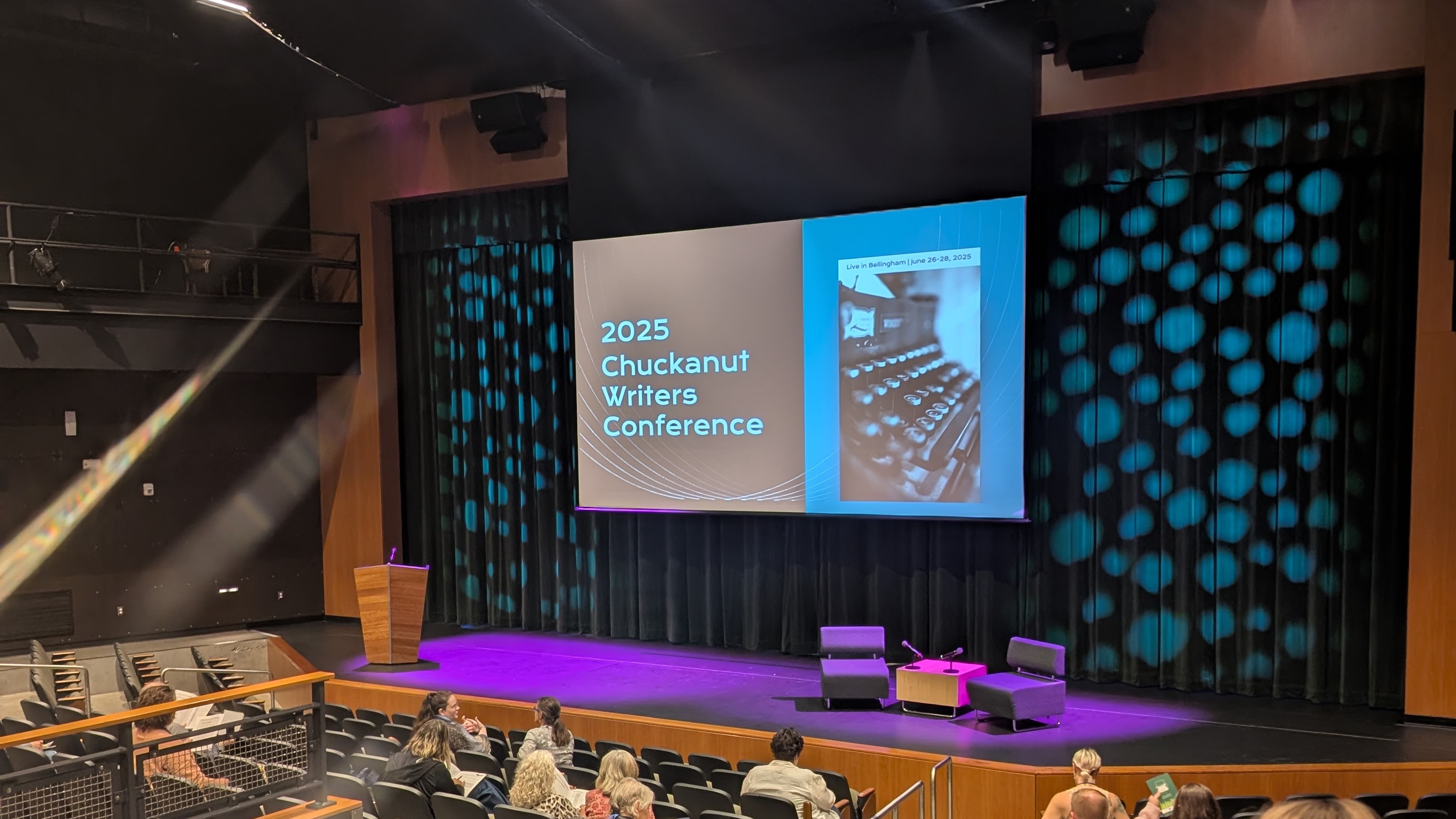
For weeks, I grappled with the decision of whether to attend the conference. The cost of the two-day ticket was in the hundreds of dollars (rightfully so), but I wasn’t ready to call myself a writer. I didn’t have a manuscript, nor was I prepared to pitch to an agent, and I didn’t know anyone who would be there. Then, a few weeks before the date, I received an email advertising a volunteer opportunity, which meant I’d get to go for free. I applied immediately and was scheduled to help on both days.
The first day was a constant whirlwind of being awestruck:
- I was surrounded by writers, storytellers, and people who loved books!
- I met real-life authors with published books and Amazon author pages and websites with official-sounding URLs like <theirname>.com
- I had the chance to speak with numerous creators about their projects, their creative processes, and how they achieved their goals.
I attended Writing Through the Archive, presented by Jane Wong. According to the conference’s guidebook, “This session weaves poetry and memoir together, writing through archival materials via sensory memory and personal reflection.” I look at what I wrote during the session, rapid scribbles on the back of a handout whose poem on the front became warped somewhere along the way as it got scanned, copied, and printed. I don’t remember what the prompt was.
If I was in my right mind I would have told you that you were horrible. If you were in your right mind you would have never lied. But what is the right mind? The right mind is what should I think should have happened. If we were more mature. If we were more experienced. Then what should have happened would have happened. You would be supportive. I would be forgiving. You would understand how an apology works.
When the session ended, I made my way to the Village Books table and purchased Jane Wong’s memoir and her second book of poetry. I began reading the memoir—the first memoir I’ve ever read—on the second day of the conference, while sitting in the Sehome High School cafeteria, watching over the coffee urn like a concerned parent, and grabbing (just one more!) cookie whenever my stomach grumbled.
This reading experience made me feel like the gears in my head had started turning in reverse order for the first time. Before yesterday, I didn’t know this person existed, and now I’m diving into the depths of their memories, thoughts, emotions, history—their life story. I wanted to talk to them, to ask questions, to know more, like in a parasocial relationship, except they chose to share what they did with their life with me, the reader. To put it plainly, I learned that memoirs are a powerful and valuable form of storytelling.
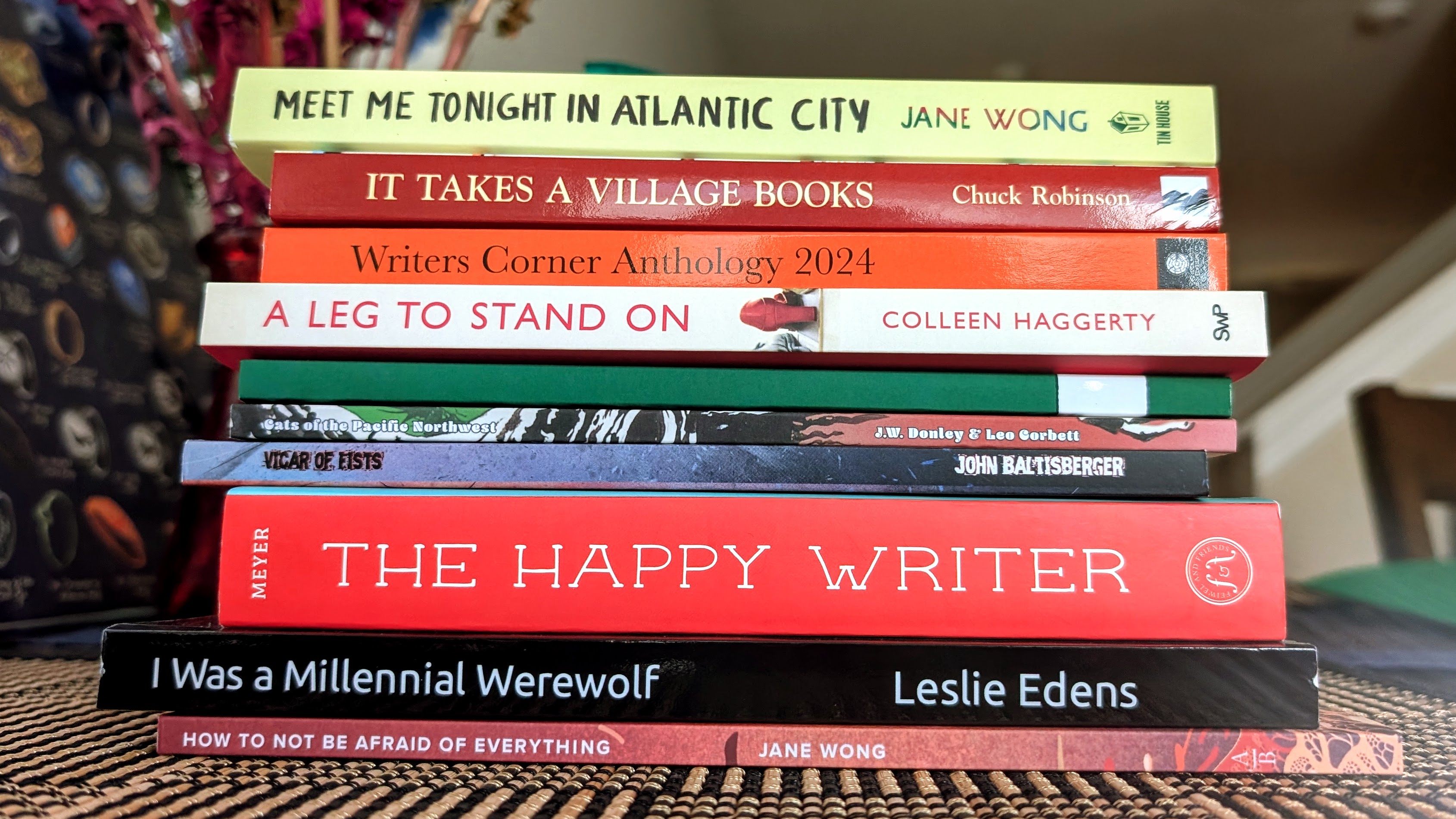
The rest of my book haul includes:
- A Leg to Stand On: An Amputee’s Walk into Motherhood by Colleen Haggerty, whom I had the pleasure of chatting with for a while as we volunteered together at the check-in table
- Three books from the Dark Forest Press table (Cats of the Pacific Northwest, Vicar of Fists, I Was a Millennial Werewolf)
- It Takes a Village Books: 35 Years of Building Community, One Book at a Time by Chuck Robinson
- The Happy Writer by Marissa Meyer
I’ve got my reading cut out for me (let’s ignore the 620 other books I have on my to-read list for now). But I love that I’m branching out into new genres, putting faces to names, and experiencing things so novel to me that I’m at a loss for words – at least until I can put pen to paper, or finger to keyboard, contemplate, reflect, absorb, process. What just happened? I just left my first writers’ conference with a big old unwieldy scalding-hot coffee urn’s worth of inspiration.
 Christine McIntee
Leave a comment